



Temporomandibular Joint (TMJ) 3D
This is a modern 3D diagnostic examination that allows precise assessment of the TMJ and its anatomical structures. The examination is performed using high-resolution cone beam CT to produce a three-dimensional reconstruction of the TMJ. It helps to identify joint dysfunction, degenerative changes, injuries, or other pathological processes. This technology is particularly valuable in assessing the causes of temporomandibular disorder (TMD).

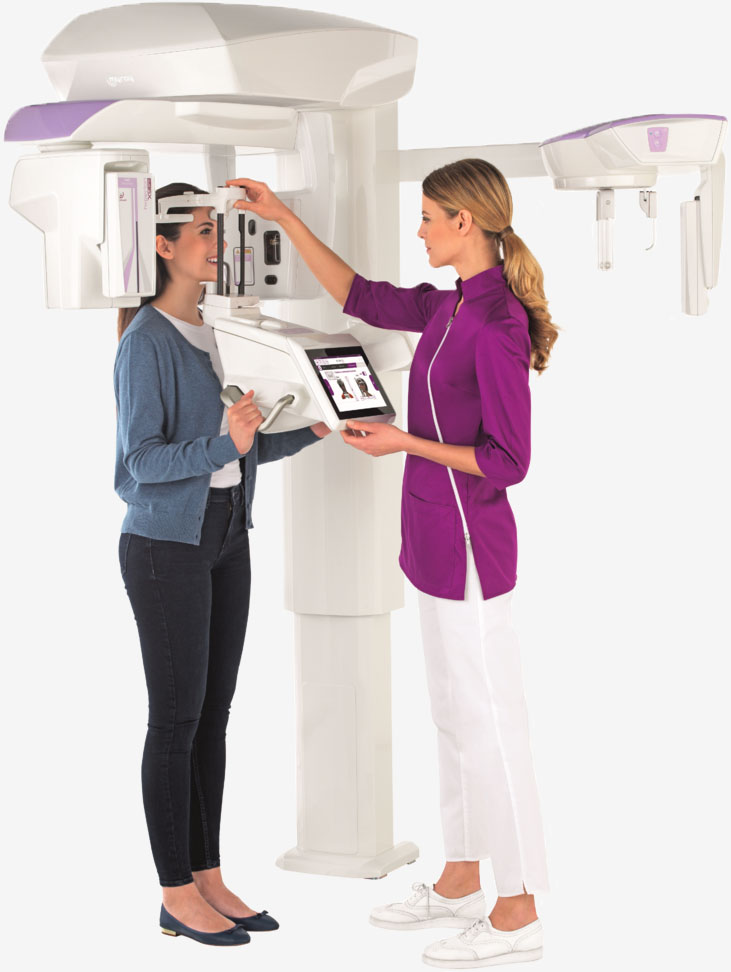
Our TMJ Scanning System
We provide convenient online access to completed examinations and services that deliver high-quality, precise temporomandibular joint assessment for patients. Unlike general radiology centres, we specialise in dental radiology, with particular expertise in TMJ scanning. This enables us to maintain the highest professional standards in this field, and our specialists have in-depth knowledge and experience in TMJ scanning.
Our TMJ Scanning System
We provide convenient online access to completed examinations and services that deliver high-quality, precise temporomandibular joint assessment for patients. Unlike general radiology centres, we specialise in dental radiology, with particular expertise in TMJ scanning. This enables us to maintain the highest professional standards in this field, and our specialists have in-depth knowledge and experience in TMJ scanning.
What is 3D Temporomandibular Joint (TMJ) imaging?
This is a modern 3D diagnostic examination that allows precise assessment of the TMJ and its anatomical structures. The examination is performed using high-resolution cone beam CT to produce a three-dimensional reconstruction of the TMJ. It helps to identify joint dysfunction, degenerative changes, injuries, or other pathological processes. This technology is particularly valuable in assessing the causes of temporomandibular disorder (TMD).